5/5review translated
“It was nice that I could upload my old CV, so I didn't have to type in all the details again. The system took it over well. On top of that, I can adjust the layout completely to my own taste.”
Esther, L
CorporateOctober 2026
Two worked examples for each profession, one for starters and one for experienced people, with an explanation of why they're structured that way.
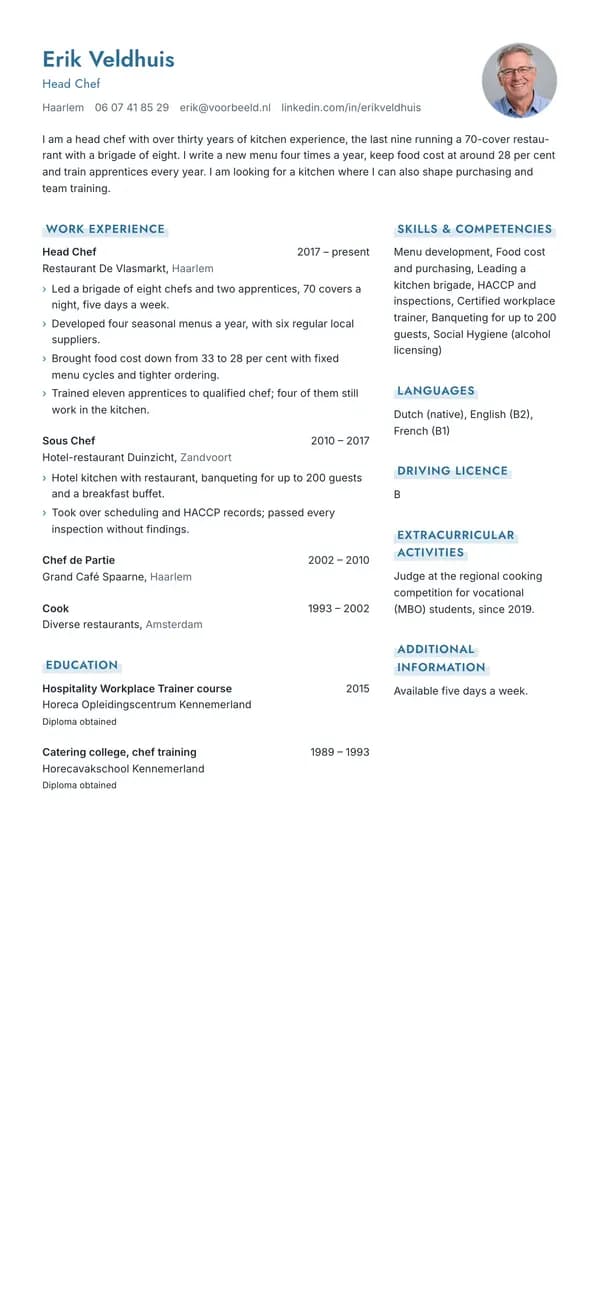
You've built a brigade that relies on you, and you know what it takes to stay calm on a packed Saturday. After more than thirty years, it's no longer about what you can cook, but about what you build. So this CV tells the story of a chef who leads: the brigade, the menu and the numbers. Food cost is there as a figure, because that's what an owner reads first. The apprentices you trained show that people like working for you. And your earliest jobs take up a single line. They're part of your story, but the last fifteen-plus years do the work.
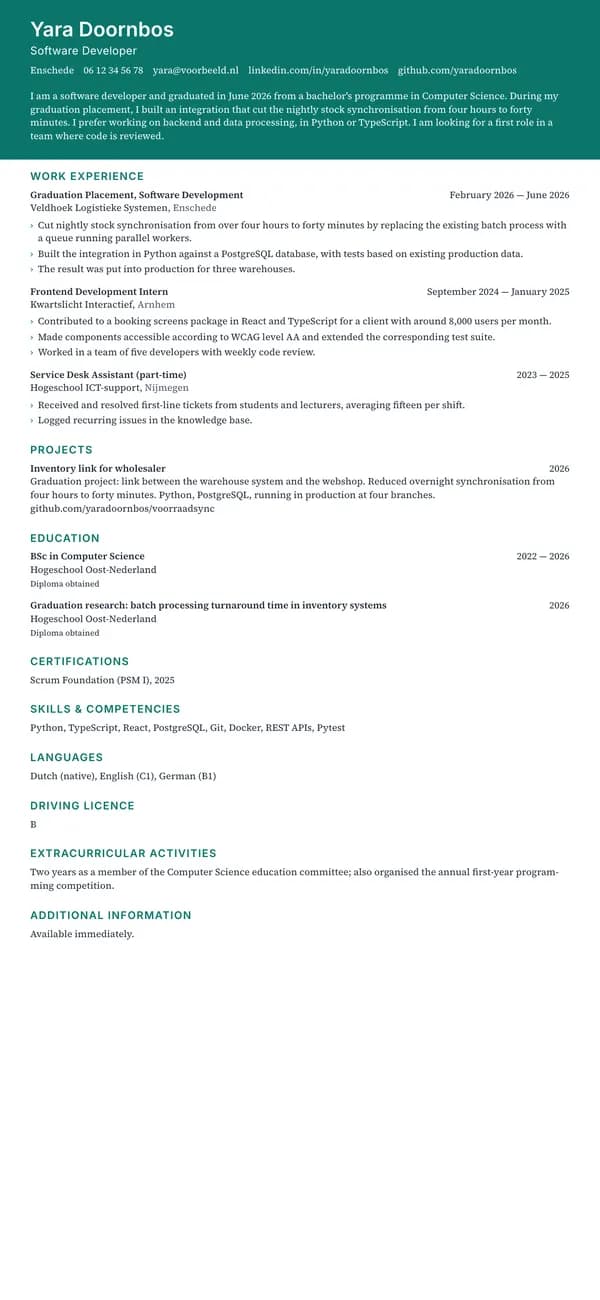
You see a problem and immediately think in steps: what's happening, where does it go wrong, what do I try first. That's exactly what an employer is looking for, it just rarely appears on a CV. Here it does. You still have little work experience, so your dissertation project is your strongest argument. That's why it appears as a full section rather than a footnote to your education. List your stack per component instead of 'experience with backend', and add the scale: how many users, how big the team. In IT, that does what turnover figures do in sales. 'Eager to learn' can go: every starter since the dawn of time has written that down.
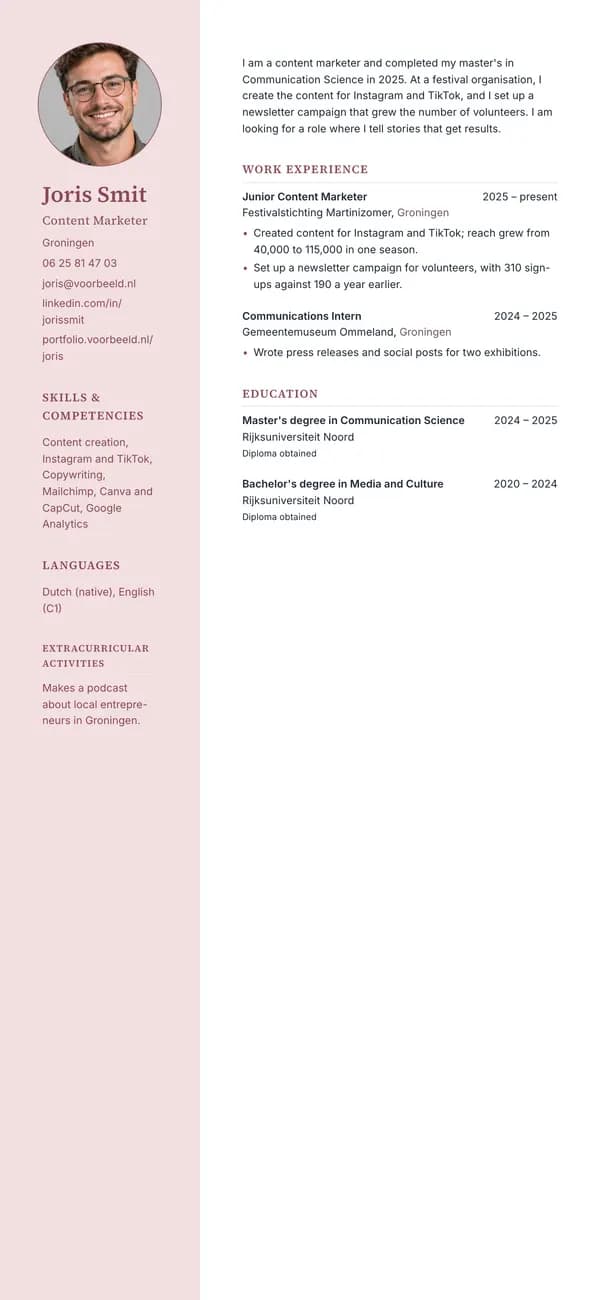
You don't just scroll through your feed: you see why one post sticks and another doesn't. That feel for what moves people is the heart of the job. This CV shows it with results instead of fine words: more reach, more sign-ups, and the campaign you came up with yourself. The figures come first, because a marketing manager wants to know what your work delivers. And your portfolio is there with a link, so they can see what you can do in one click.
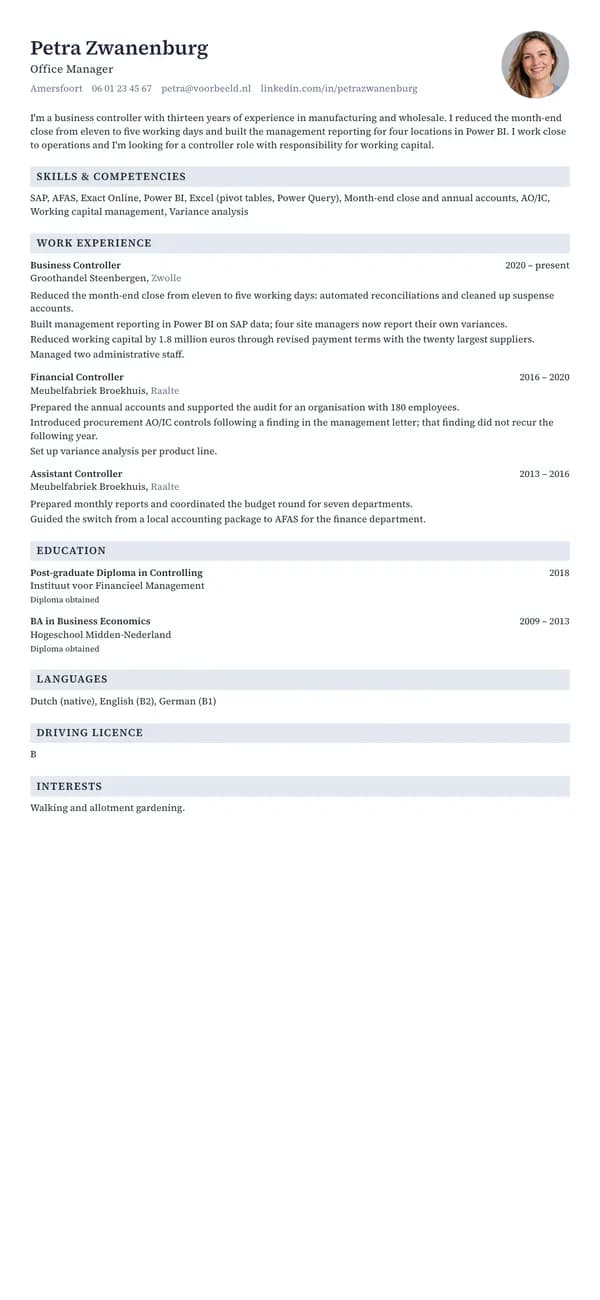
You let numbers tell the real story, and dare to say so when that story is uncomfortable. Thirteen years, with a clear progression from administration to control: that's the core of this CV. Name your role exactly as it was called: business controller and financial controller are genuinely two different jobs, even if at parties you just get 'something with numbers'. Technical terms like month-end close and working capital management belong here, as long as you actually did that work. Anyone who probes will notice the difference within a minute.
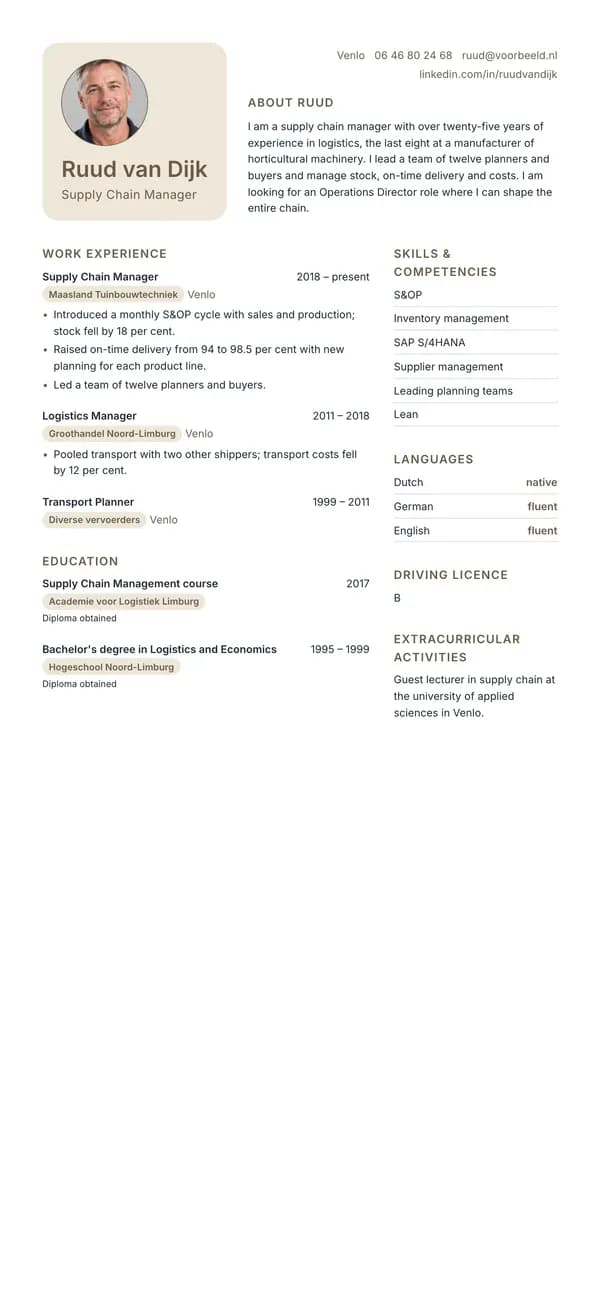
You keep the whole chain in your head, from supplier to customer, and you know which lever to pull when something stalls. After more than twenty-five years, you're the one the board turns to when stock is too high or lead times are too long. This CV shows that with the figures a board steers by: less stock, better on-time delivery and less transport. Your team is in it too, because you achieve those results together. And your early years as a planner take up a single line. They're part of your story, but the last fifteen years do the work.
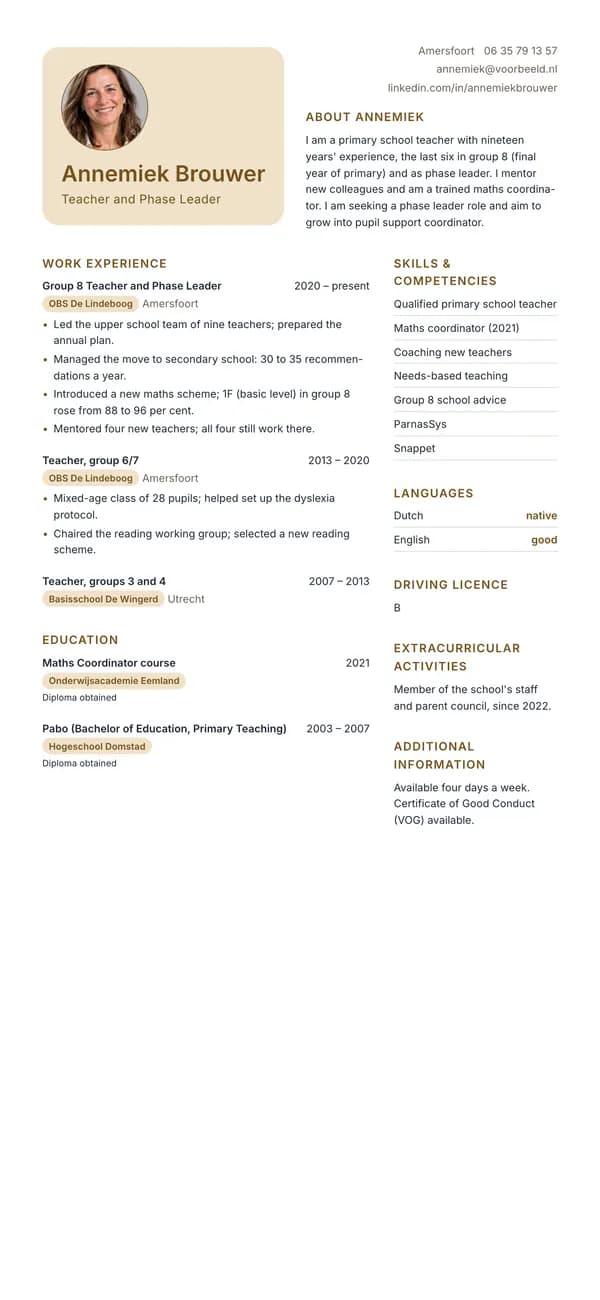
You're the colleague everyone drops in on: the new teacher just as much as the parent who is unsure about the secondary school recommendation. After nineteen years in the classroom, you know what works, and this CV shows it without boasting. The story runs in one line, from group 3 to the upper years and from your own class to a whole team. The maths results are in it with figures, because that's what a school board looks at. And the new teachers you mentored, who all stayed, say more about you than any word about commitment. Your first years take up a single line. They count, but you no longer need to explain them.
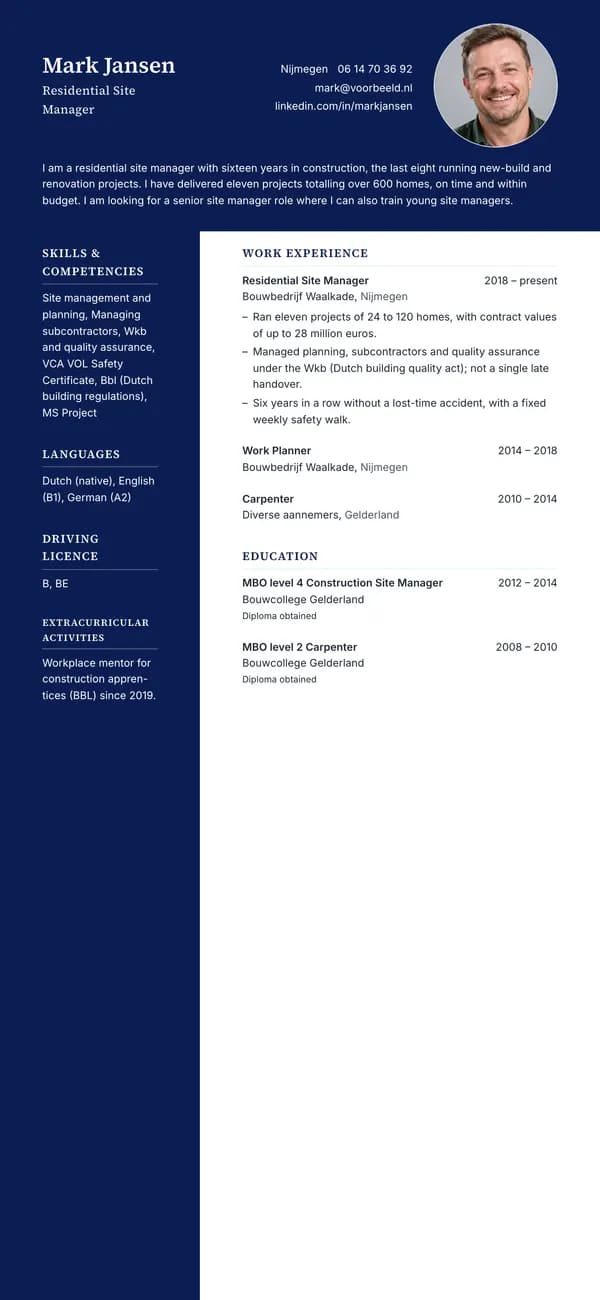
You're the one who keeps the overview on site when everything has to happen at once, and your crew knows your schedule holds. After sixteen years, it's no longer about what you can do with your hands, but about what you deliver. So this CV tells the story of a site manager who steers: on time, on budget and on safety. The projects are there with their size and budget, because that's the first thing a director looks at. And your safety record deserves to be seen: six years without a lost-time accident says more about your leadership than any word could.
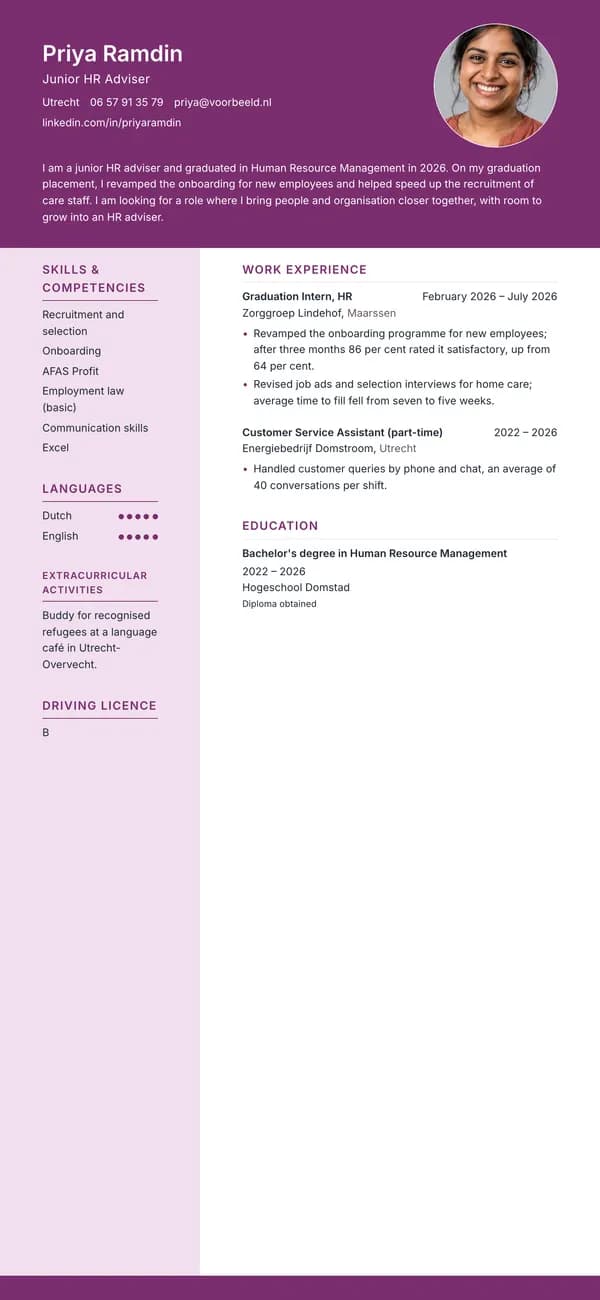
You're the colleague people drop in on when something's up, and you love making someone feel welcome. That's exactly what HR is about. This CV shows you already do it in practice: you improved onboarding and got vacancies filled faster. Those results come first, with a figure, because that's how an HR manager spots a starter who looks beyond the admin. And your part-time job in customer service stays on: it shows you're used to really listening.
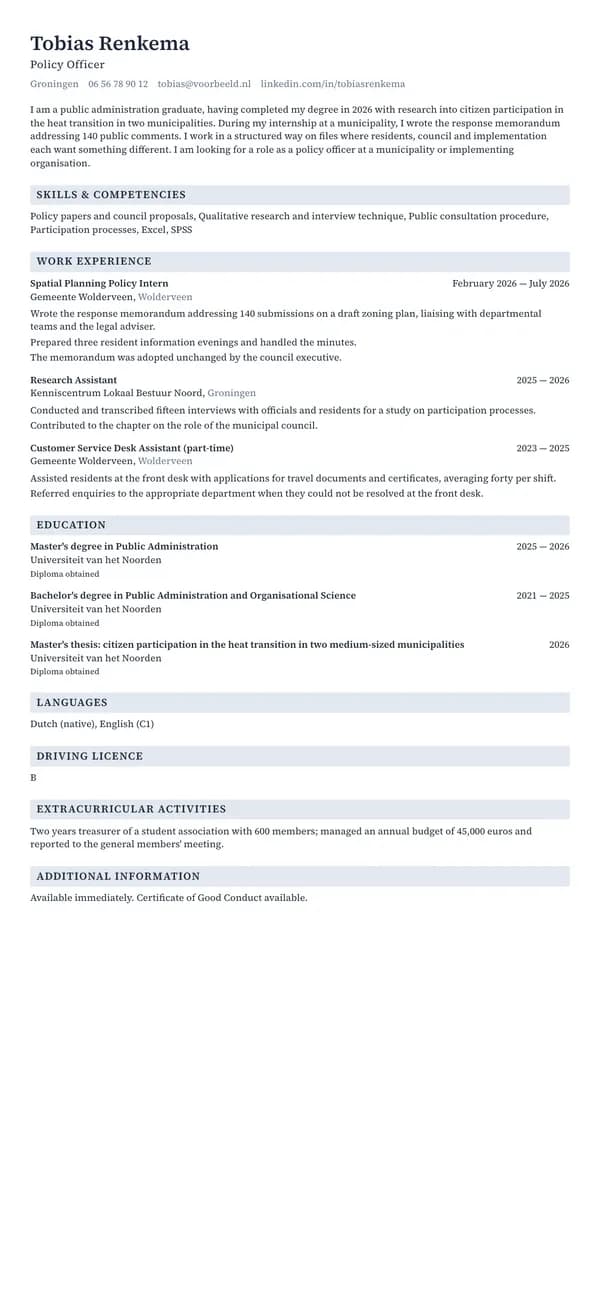
You think in terms of interests rather than parties, and you have patience for a process that takes longer than a quarter. That's exactly the right profile, but it's assessed differently than you might expect. In government, your CV is measured against a list of competencies. Literally, with tick boxes. So describe your experience as a situation with an outcome: what was going on, what did you do, how did it end. Board work and committees count too, since that's precisely where you show collaboration and clashing interests. And keep your profile short: five lines is the standard they use themselves, not five paragraphs.
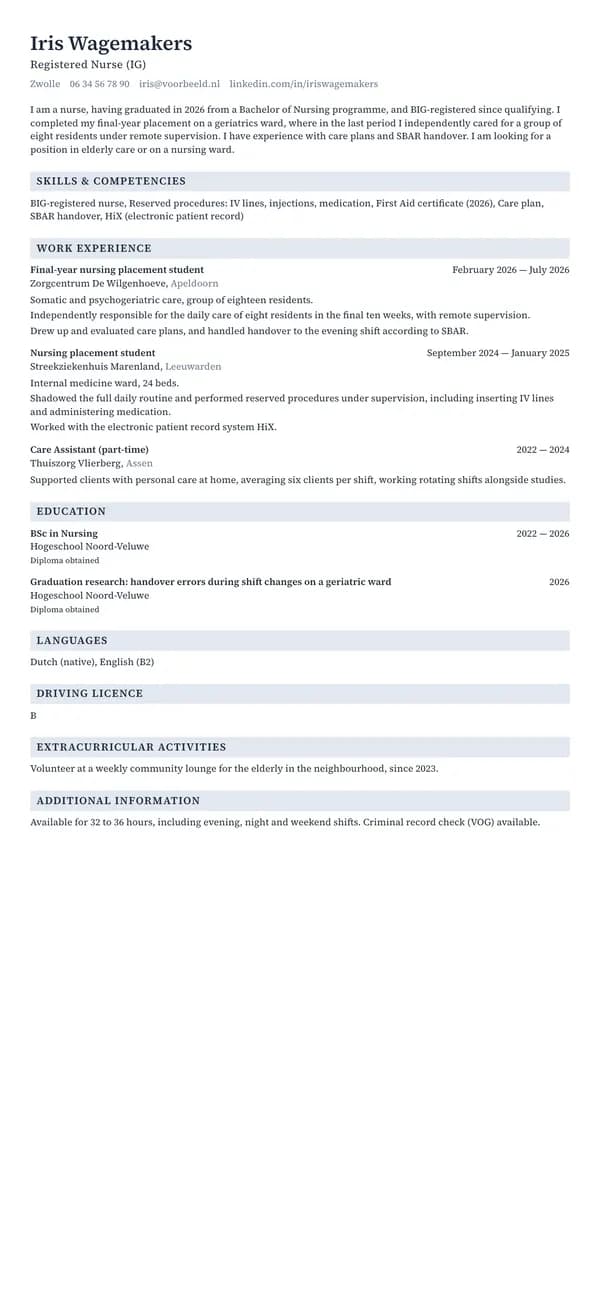
You stay calm when things get busy and see the person behind the file. That's the profession, and it's not something you pick up quickly. So show it in what you did. 'Certified Care Assistant (IG)' still tells a recruiter fairly little, because geriatric care is quite different from home care, and that very difference determines whether you're the right fit. That's why each placement states where you worked, with whom, and how much you were allowed to do yourself. Your registration and certificates go at the top, since that's what's screened for in the first round, not your motivation. And everything stays at department level: your former residents don't need to apply along with you.
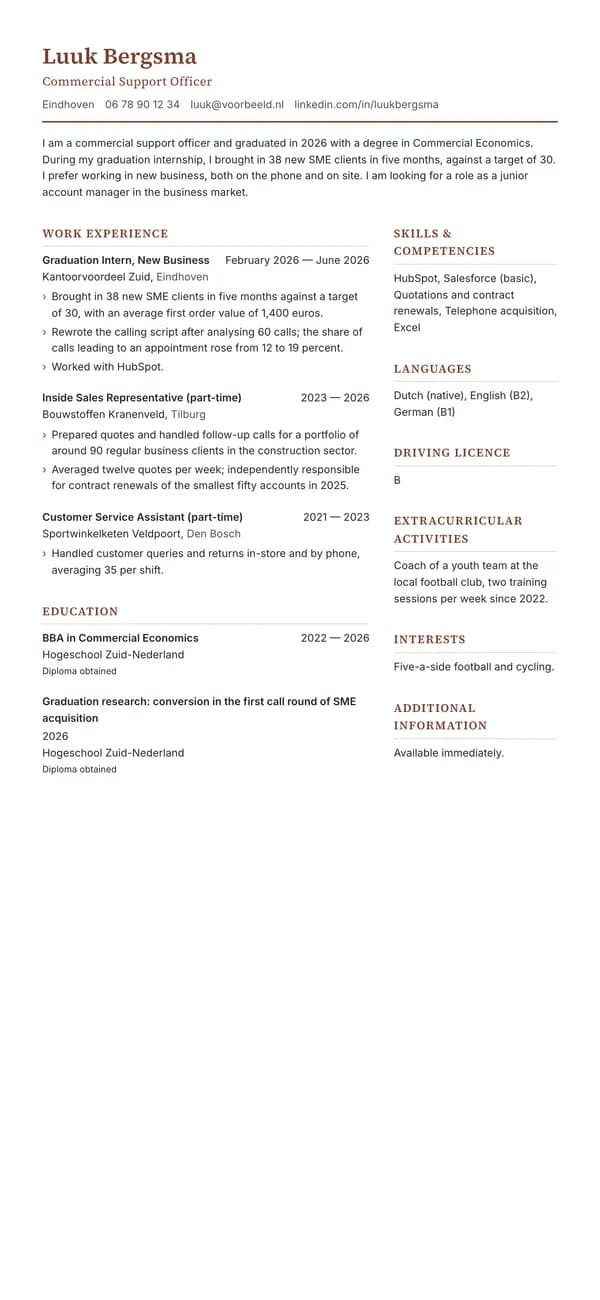
You hear a 'no' and think: not yet. That's not a trick, it's a trait, and in sales it's the most important one there is. Except: sales is pretty much the only field where they read your CV like a report. Where are the numbers? You have them, even as a starter, just on a smaller scale. Always include the time period, though, because '120% of target' without a timeframe could just as well cover your whole life. Also mention what kind of clients were involved, because the same job title means very different work with a different client type. We've cut 'driven' and 'results-oriented'; let your numbers say that instead.
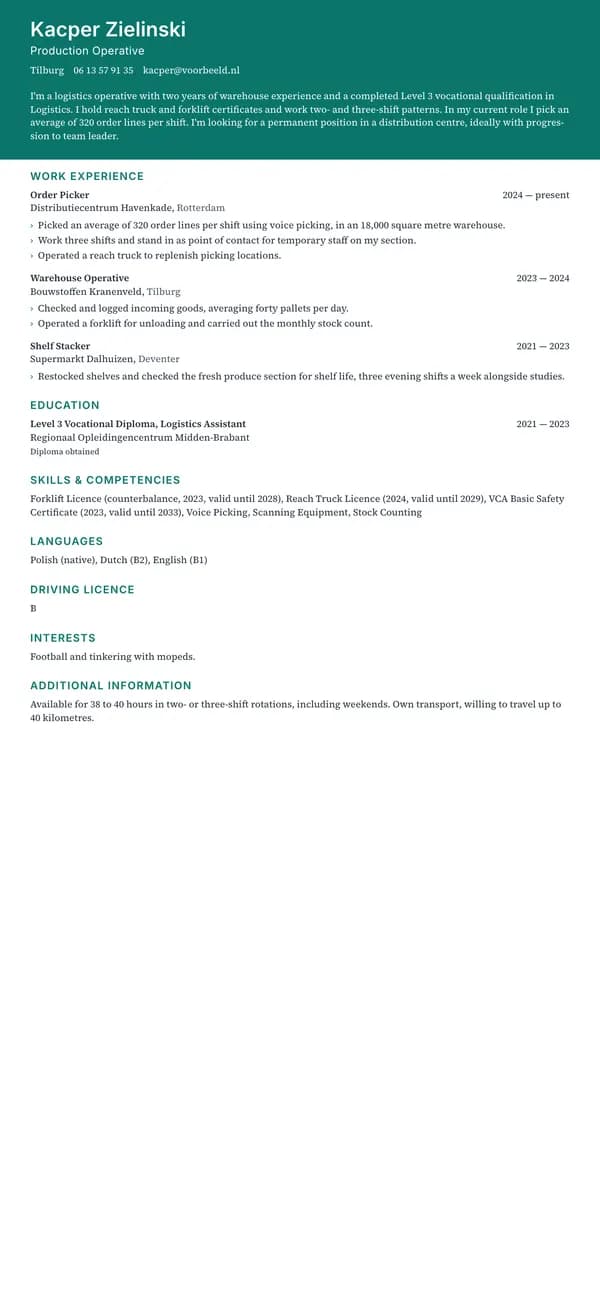
You show up when it matters, even at five in the morning, and you get stuck into whatever needs doing. That's exactly what an employer is looking for, but they'll read something else first. In this line of work, the first reader doesn't look at your profile text but at your papers. So your certificates go at the top, with type, year obtained and valid until: an expired VCA is a rejection before anyone's read the rest. Below that, your availability and transport, shown separately and clearly, because with shift work 'can start at five' often counts for more than three years' experience. And per language, your level, because you do need to be able to follow safety instructions.
The people, employers and results in these examples are fictional.
Follow us
May we use analytical and advertising cookies, including those from our partner Google? Cookie policy